APARTMENT MATERIALS & FINISHES
Materials form the tactile and visual baseline of an interior. Select surfaces based on durability, maintenance requirements, and structural compatibility.
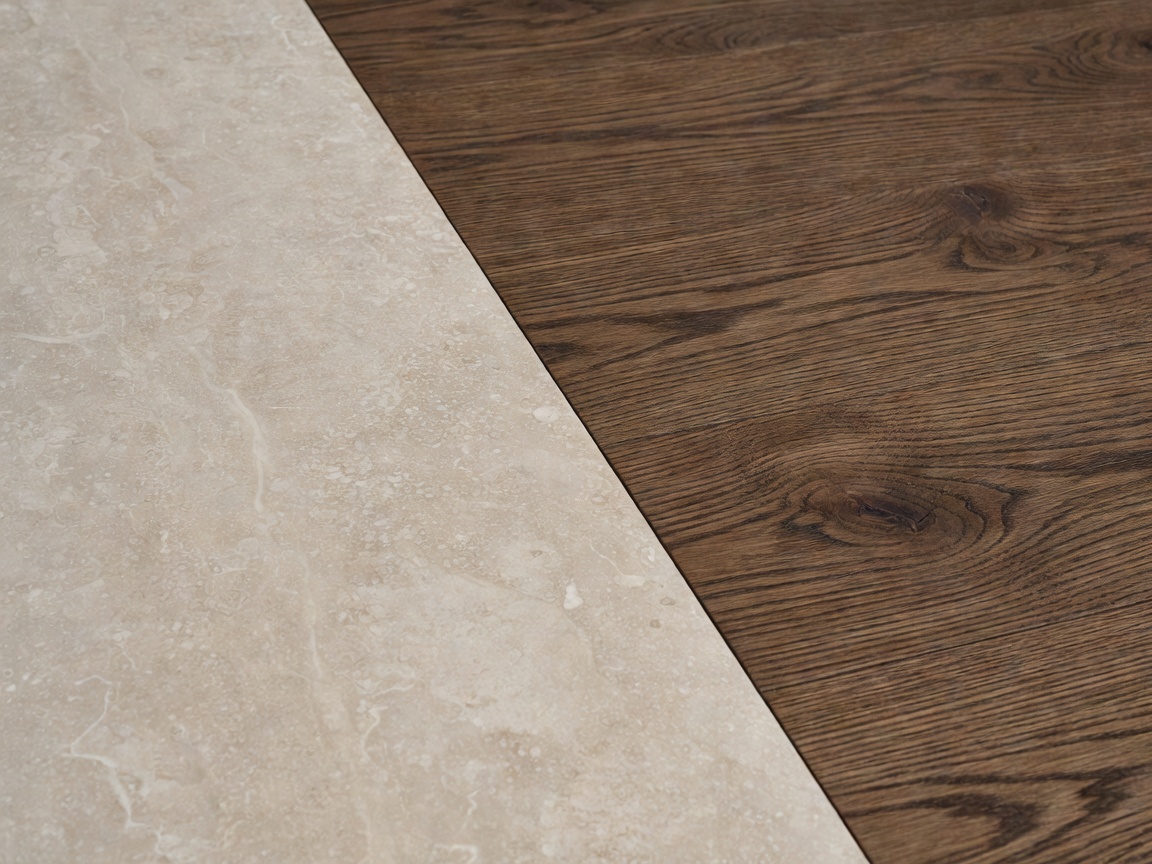
Interior finishes must withstand daily abrasion while maintaining visual coherence. In an apartment, applying too many disparate materials fractures the space. A restrained palette—typically one continuous floor finish, one accent timber, one primary stone, and a unified metal finish—creates calm, expansive environments.
Timber Flooring & Veneers
Wood injects organic warmth into rigid concrete or masonry boxes.
- Engineered vs Solid: Solid timber shifts with humidity. Engineered floorboards provide superior stability, crucial when installing over acoustic underlays or underfloor heating.
- Species: Oak remains the European standard for durability and neutral grain. Walnut provides rich, dark contrast but scratches more easily.
- Application: Continuous timber flooring from the entrance through the living spaces visually enlarges the apartment. Use matching timber veneers for built-in joinery to maintain coherence.
Good For
Creating acoustic dampening. Harder surfaces like tile echo heavily in small spaces; timber absorbs a fraction of high-frequency sound, softening the acoustic environment.
Natural Stone & Terrazzo
Used predominantly in wet zones (kitchens, bathrooms) and entryways.
- Marble & Limestone: Visually premium but porous. Unsealed marble in a kitchen will stain from acidic foods (lemon, wine).
- Terrazzo: A highly durable composite of marble chippings set in cement or epoxy. Excellent for seamless bathroom floors or robust kitchen worktops.
- Ceramic & Porcelain Tile: The most practical substitute for natural stone. Porcelain is non-porous, highly resistant to impact, and requires minimal maintenance.
Plaster & Concrete Surfaces
Wall finishes dictate how light bounces through a room.
- Standard Gypsum: The default flat finish. Requires high-quality prep work (Level 5 finish) for perfection under raking light.
- Mineral Plasters (Tadelakt, Marmorino): Provide subtle texture and depth. Tadelakt is water-resistant and can replace tiles in shower enclosures for a seamless look.
- Exposed Concrete: Achieved either by stripping back finishes to the structural shell or applying microcement. Provides an industrial, heavy visual weight.
Architectural Metals & Glass
Metals outline spaces and form touchpoints (handles, taps, switches).
- Brass & Copper: Unlacquered living finishes will oxidize and patinate over time. Lacquered versions stay bright but can chip.
- Powder-Coated Steel: Matte black or colored steel offers high contrast and extreme durability.
- Glass: Reeded or fluted glass allows light transmission while obscuring detail—perfect for bathroom partitions or dividing entryways.
What To Know
Consider the total weight of materials. Installing dense concrete screeds or thick natural stone slabs across an entire floor may exceed the structural load limits of historic timber-framed apartment floors. Always verify load limits before ordering heavy materials.